
Entry-level jobs have long served as the first step toward a successful career. But as skill requirements rise, AI reshapes work, and true entry-level opportunities become harder to find, concerns are growing about what this means for workers, employers, and the future workforce.
New research highlights a common challenge on both sides of entry-level work: protecting pathways into the workforce while preparing organizations for long-term success.
The Growing Challenges Impacting Entry-Level Work
Traditionally, entry-level jobs provided workers with opportunities to gain experience, develop professional skills, and explore career paths. Today, many of those opportunities are becoming harder to access.
Employers and job seekers alike recognize that entry-level roles now require more skills than they did in the past. At the same time, AI and automation are increasingly being used to perform tasks that were once assigned to new employees. These changes are reducing opportunities at the bottom of the career ladder just as organizations continue to need future talent pipelines.
United States: Entry-Level Jobs Under Pressure
Many organizations are facing difficult decisions. While technology may improve efficiency, reducing entry-level hiring too aggressively could limit the ability to develop future talent from within.
What U.S. Employers Are Seeing
- More than 4 in 5 hiring managers say entry-level jobs require candidates to possess more skills than in the past.
- 60% add it’s more efficient to use AI for entry-level tasks than to hire and train a candidate.
What U.S. Job Seekers Are Seeing
The importance of entry-level work remains clear to workers:
- Nearly all job seekers (96%) say entry-level jobs are important for helping employees grow within a company.
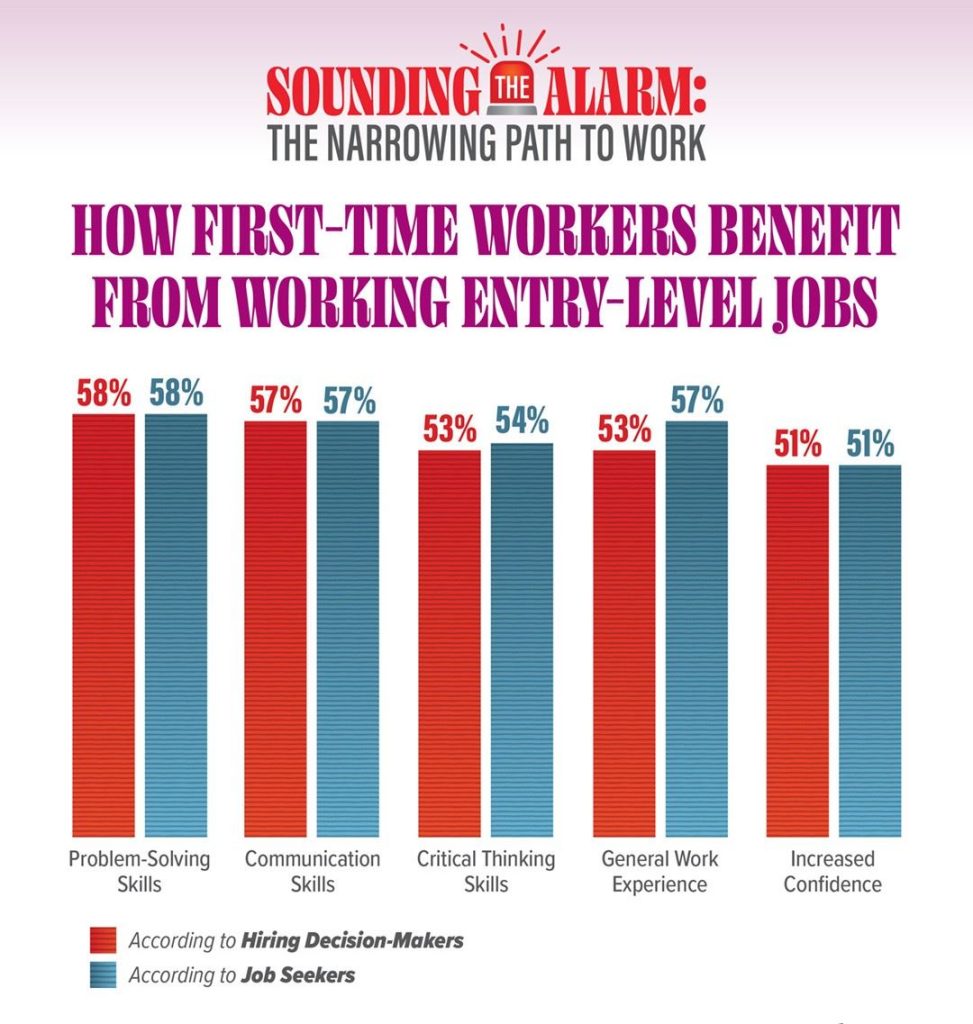
- Nine in 10 (90%) say these roles build critical career skills such as communication and problem-solving.
For those just entering the workforce, landing an entry-level role can provide far more than a paycheck. It offers real-world experience, professional development, and opportunities to build workplace confidence.
What This Means for Job Seekers and Employers
If you’re searching for an entry-level position, employers may be looking for more workplace-ready skills than in the past. Demonstrating communication abilities, adaptability, problem-solving skills, and a willingness to learn can help differentiate you from other candidates.
Organizations that continue investing in entry-level talent may gain a competitive advantage by building stronger talent pipelines and developing future leaders internally. Entry-level hiring remains an important tool for succession planning and workforce development.
Canada: Preserving the First Step Into the Workforce
Many of the same trends are occurring in Canada, where employers and job seekers are expressing similar concerns about the future of entry-level work.
What Canadian Employers Are Seeing
- 81% of hiring managers say entry-level jobs require candidates to possess more skills than in the past.
- 45% add it’s more efficient to use AI for entry-level tasks than to hire and train a candidate.
What Canadian Job Seekers Are Seeing
Canadian workers strongly believe entry-level positions remain essential:
- Nearly all job seekers (96%) report that entry-level jobs are important for ensuring workers grow within a company.
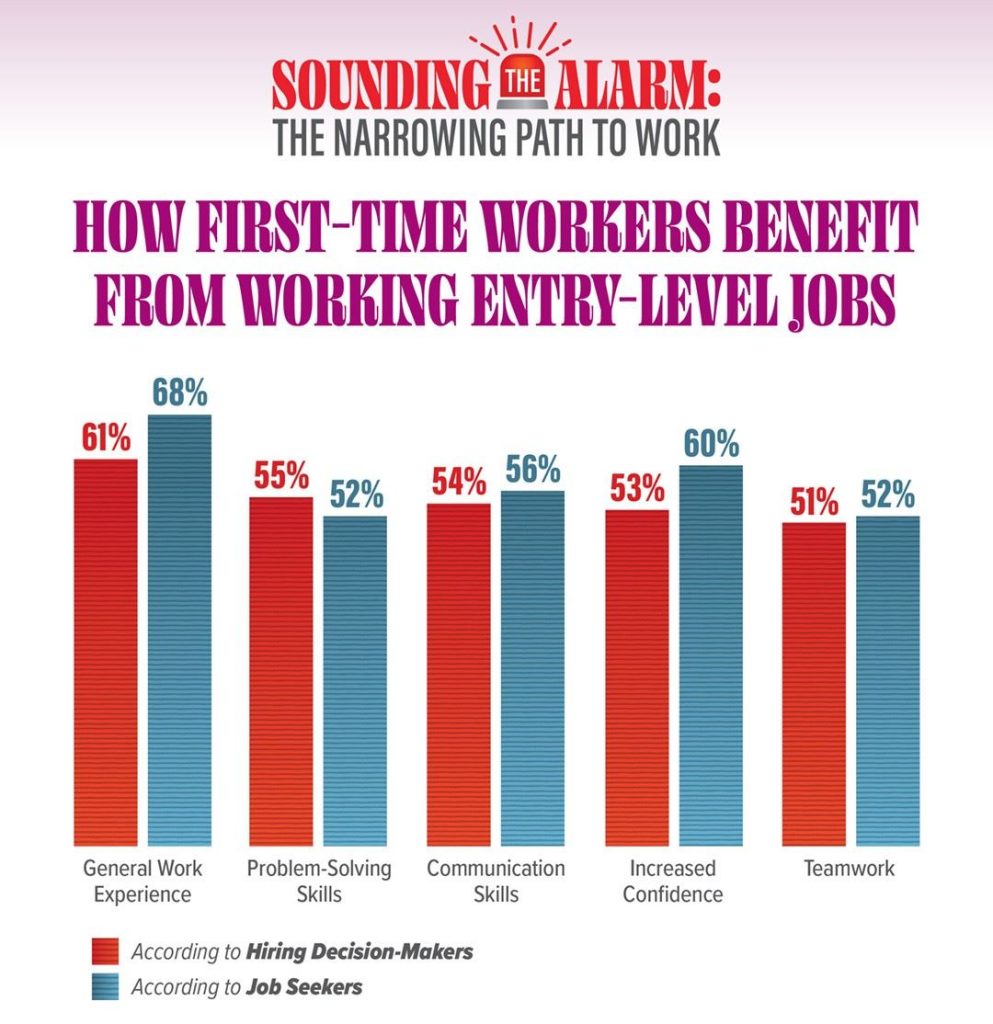
- 89% say these positions provide workers with skills that are critical to career progression, such as problem-solving and communication.
These findings reinforce the idea that entry-level jobs continue to serve as valuable training grounds for future career success.
What This Means for Job Seekers and Employers
People entering the labour force should focus on developing transferable skills that complement technology rather than compete with it. Communication, teamwork, customer service, critical thinking, and relationship-building remain valuable traits that employers continue to seek.
Employers that create pathways for new workers can strengthen recruiting efforts, improve knowledge transfer, and build a sustainable workforce for the future. Entry-level employees often become tomorrow’s experienced professionals and organizational leaders.
Looking Ahead
Entry-level jobs remain a critical bridge between education and long-term career success. Yet rising expectations, technological change, and fewer true beginner opportunities are creating new challenges for workers and employers alike. The organizations that continue investing in entry-level talent today may be better positioned to build the skilled workforce they need tomorrow, while job seekers who focus on developing both technical and human skills can strengthen their prospects in an evolving labor market.
About Express Employment Professionals
At Express Employment Professionals, we’re in the business of people. From job seekers to client companies, Express helps people thrive and businesses grow. Our international network of franchises offers localized staffing solutions to the communities they serve across the U.S., Canada, South Africa, Australia, and New Zealand, employing more than 11 million since its inception. Learn more at ExpressPros.com or ExpressPros.ca.
Last Updated on August 11, 2026
