
Data centers play an important role in housing equipment that allows information to be communicated through servers and offer new job opportunities. Behind the tech-savvy nature of data centers, there’s a variety of jobs and professionals keeping them running, from construction workers to project managers and electricians. Inform your career decisions by learning more about data centers and the jobs they offer.
What Do Data Centers Do?
There are varying types of data centers, but they share the common thread of housing computer equipment necessary for processing information, like servers and motherboards. There are rows of shelving to hold the physical servers and a network of wiring throughout the building. Data centers require a good amount of space for equipment, ample walkways, HVAC, and more.
Data centers are sometimes called AI data centers. They function the same, but AI data centers need more processing power and resources to maintain the equipment inside.
How Do Data Centers Work?
A data center company may own the building and equipment, or lease space to other companies that need these services. As more digital information is transmitted and AI usage grows, more data centers are needed to handle the amount of information being processed and stored.
Types of Data Centers
A study by PwC for The Data Center Coalition highlights types of data centers, which include:
- Enterprise—company-owned data center for internal data processes
- Hyperscale—contains at least 5,000 servers, spans at least 10,000 sq ft (930 sq meters), and offers at least 40 megawatts of capacity
- Multitenant—leases equipment or bandwidth to other companies
- Edge—typically used to support internet of things (IoT) and low-latency demands
The Global Data Center Hub outlines three revenue models for data center owners:
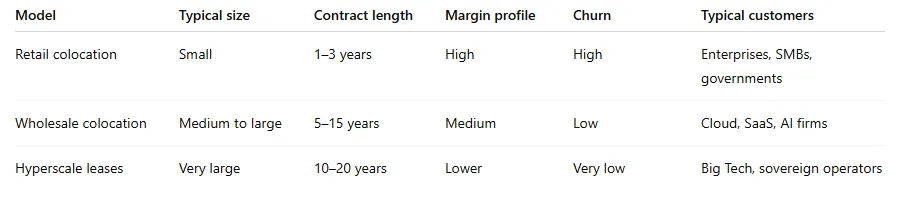
Environmental Impact
The creation of new data centers sparks sustainability and environmental conversations.
According to the Environmental and Energy Study Institute, a large data center can use up to 5 million gallons of water per day, and 56% of electricity used by data centers in the U.S. is derived from fossil fuels. Deloitte details the projected increase in demand for power and liquid cooling as data centers expand and new data centers are built:
- The AI server power supply market is projected to grow to more than $31 billion in 2028, from $1.5 billion in 2024.
- The liquid cooling market is projected to grow to more than $30 billion in 2028, from $300 million in 2024.
For job seekers passionate about sustainability and the environmental impact of their workplace, understanding how data centers work is an important consideration.
The Number of Data Centers Is Growing—so Is the Number of Jobs
The data center market is growing, and as more are planned, the facilities need to be constructed, monitored, and maintained.
The global data center market is estimated to reach more than $739 billion in revenue by 2030, according to Statista. Cargoson, a transport management software company, estimates that North America accounts for 48% of data centers globally:
- ~12,000 data centers worldwide
- 5,400+ in the U.S.
- 300+ in Canada
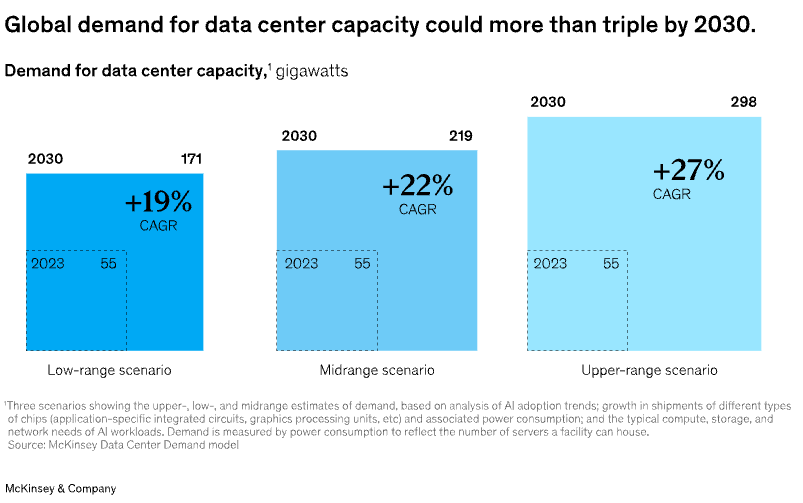
Courtesy of McKinsey
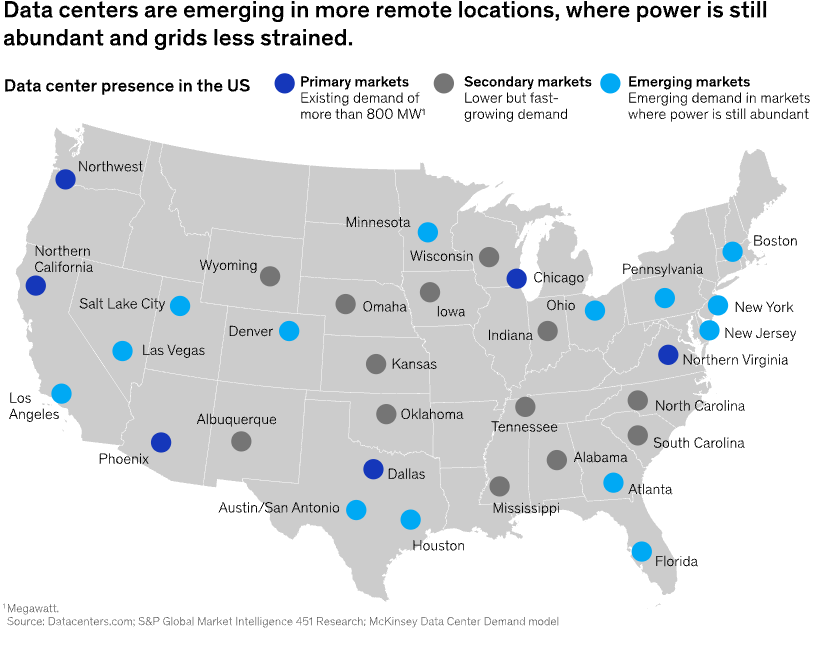
Courtesy of McKinsey
Data Center Job Opportunities
Data centers often don’t require a large staff, and the jobs aren’t available everywhere, but as the market grows, so do job opportunities. Each job in the industry supports more than six other jobs, according to a study by PwC for The Data Center Coalition.
The U.S. Census Bureau found a 60% increase in data center employment from 2016 to 2023, with more than 40% of data center jobs concentrated in California, Texas, Florida, New York, and Georgia. According to Deloitte, the power sector saw a 20% increase in core job postings and a 64% increase in data center job postings between 2023 and 2025.
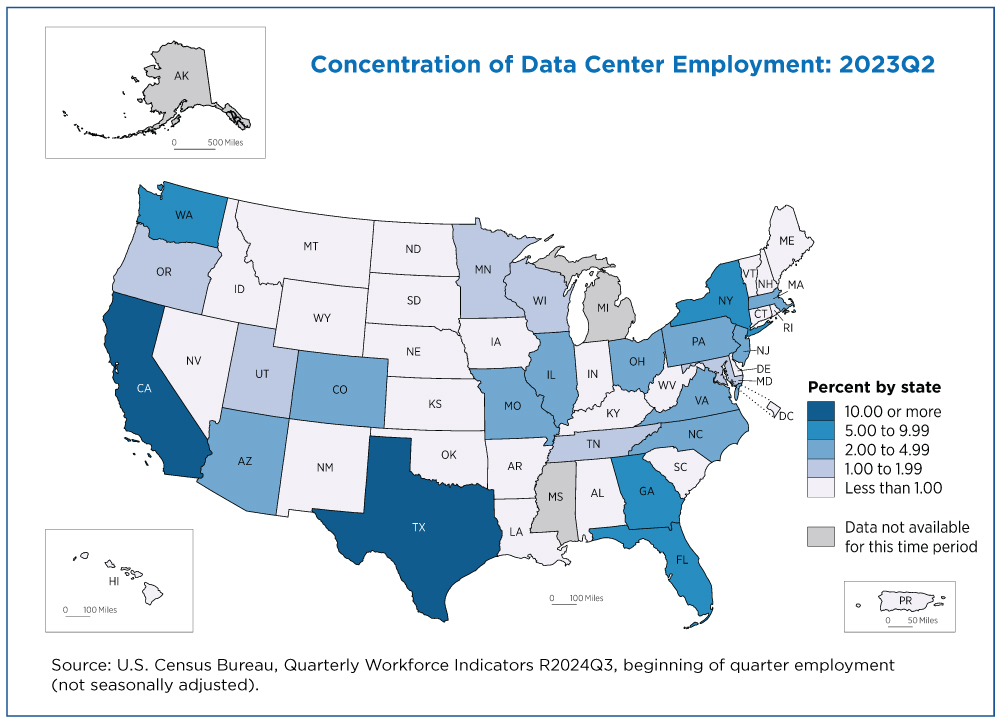
Data Center Job Titles
- Cloud Operations Engineer
- Construction
- Cooling Technician
- Data Center Engineer
- Data Center Technician
- Electrician
- Facilities Management
- HVAC
- IT Support Specialist
- Network Architect
- Pipefitter
- Plumber
- Project Manager
- Safety Specialist
- Security
- Welder
What This Means for Job Seekers
As data centers expand, so do the conversations around their economic impact, role in local communities, and job opportunities. For job seekers, data centers offer more than one career path, even if opportunities vary by location. Understanding the types of jobs data centers need and how the facilities operate can help you identify whether this growing industry aligns with your career interests.
While data center jobs are limited, these roles share skills and required experience with other jobs that may be more accessible in your area. Contact your local Express Employment Professionals office to learn about job opportunities near you.
Frequently Asked Questions About Data Center Jobs
What kind of jobs are available at data centers?
Data centers require workers across a wide range of jobs, including in construction, technology, IT, security, safety, Skilled Trades, and Light Industrial.
Do you need a tech background to work at a data center?
No, a technology background isn’t required to work at a data center. While the skills and technical knowledge can be beneficial, data centers also need people in jobs like electrician, facilities management, plumber, project manager, and more.
Are data center skills transferable to other jobs?
Yes, many skills used in data center jobs can transfer to roles outside the industry, and vice versa. Even if data center jobs are limited in your area, the skills, experience, and training can help you find work in other in-demand positions.
How many jobs do data centers create?
Data centers often operate with a relatively small team, so a single facility may not employ many people. However, the effect extends beyond the data center job, reflecting the broader economic impact of construction, utilities, maintenance, and related services.
Why do we need data centers?
Data centers are needed to store, process, and manage digital information. They support internet use, cloud computing, AI, business systems, streaming services, and more. As more people and organizations rely on digital technology, data centers play a central role in keeping that infrastructure running.
Last Updated on August 4, 2026
