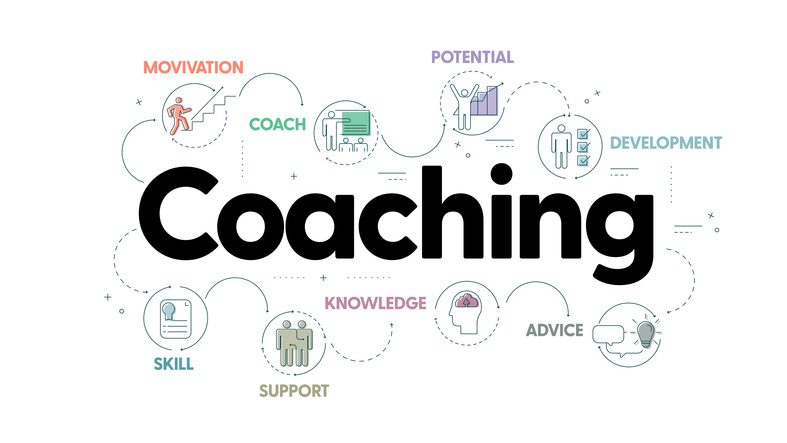
Providing feedback to employees is a crucial skill for leaders of all levels. Beyond offering critiques or highlighting areas of improvement, coaching employees to reach their full potential is a unique opportunity for leaders to offer connection and guidance.
Coaching vs. Feedback
Coaching and feedback share some similarities but are different approaches to offer support and opportunities for employees to improve. Feedback is often one-directional, while coaching is collaborative and conversational.
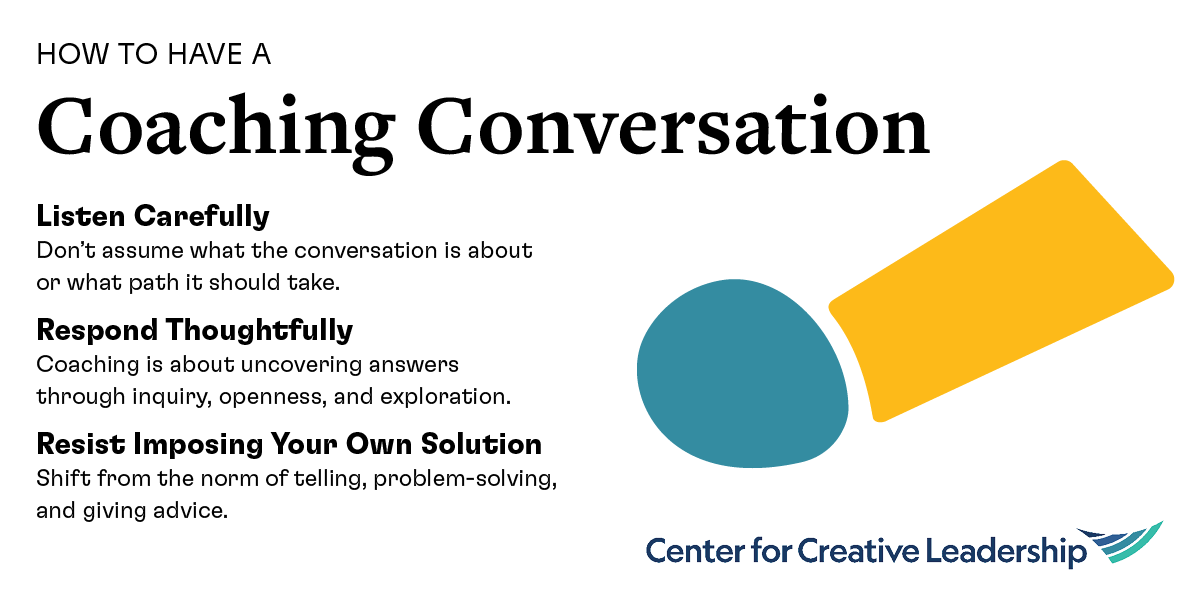
Coaching offers mentorship and professional development. While it may encompass giving feedback, coaching centers around development for the future ushered forward with guidance and respect.
Coach Your Team
Coaching isn’t necessarily easier or more difficult than offering feedback. However, it does require a different approach that may take time to learn before it becomes a default response. Gallup explains coaching as:
- Being curious
- Using natural conversations to support ongoing dialogue
- Accountability for employee performance
The Center for Creative Leadership (CCL) offers the LACE acronym as a guideline to coaching conversations. Coaching is relationship-based and centers on collaboration, communication, respect, and support. When leaders connect with their team members in this way, it fosters psychological safety.

Employees generally want meaningful feedback, but only 26% of feedback helps employees do better work, according to Gallup. While coaching and feedback both can be effective tools for growth, coaching is a holistic and future-focused approach. It encourages employees to reflect, set goals, and build skills over time, rather than simply reacting to past performance.
Coaching conversations may be uncomfortable at first, but through open communication and mutual trust, coaching empowers employees to take ownership of their development and fosters lasting change.
Put Me in, Coach
Coaching isn’t restricted to leaders coaching their direct reports; it can happen between peers, teams, and across the organization. Principle Based Management shares examples of what coaching can look like with your supervisor, coworkers, someone with more experience, and someone you don’t know well. These examples highlight the impact coaching can have when it becomes a skill brought to a variety of situations, rather than viewed as a replacement form of feedback.
Coaching vs. Feedback—Marcus Buckingham
The ability to coach effectively is more important than ever. When leaders commit to meaningful dialogue and future-focused development, they foster environments where everyone can thrive. Prioritizing coaching over simple feedback ensures people feel valued, engaged, and prepared to meet the demands of the changing work landscape.
About Express Employment Professionals
At Express Employment Professionals, we’re in the business of people. From job seekers to client companies, Express helps people thrive and businesses grow. Our international network of franchises offers localized staffing solutions to the communities they serve across the U.S., Canada, South Africa, Australia, and New Zealand, employing more than 11 million since its inception. For more information, visit ExpressPros.com/Employers or ExpressPros.ca/Employers.
